
Hybrid Cloud Migration Strategies: How to Balance Cost and Control
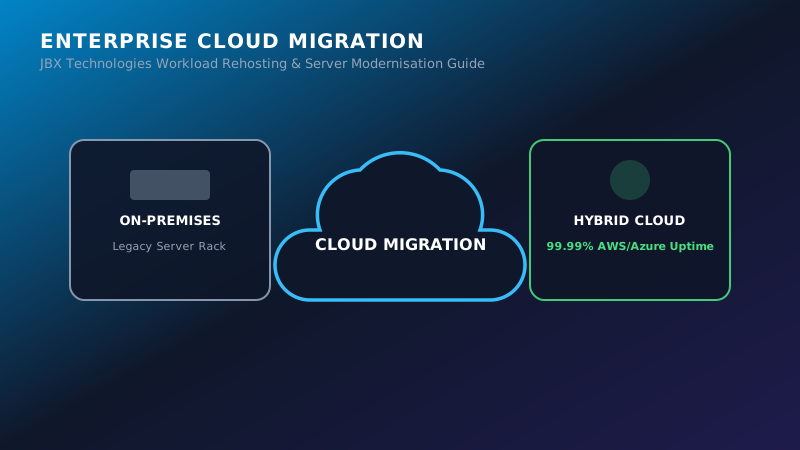
Table of Contents
Why Hybrid Cloud Is the Preferred Choice for Enterprises
While pure public cloud adoption dominated early cloud strategies, many enterprises discovered that sensitive databases, latency-critical applications, and legacy databases are better suited for private servers. Hybrid cloud combines on-premise infrastructure or private cloud with public cloud resources (such as AWS, Azure, or Google Cloud), offering maximum operational flexibility.
The 5 R's of Cloud Migration Strategy
When evaluating workloads for migration, technical teams apply the 5 R's framework: Rehost (Lift and Shift), Replatform (minor optimization without code rewrites), Refactor (re-architecting for cloud-native microservices), Repurchase (transitioning to SaaS platforms), and Retain (keeping legacy systems on-premise). Conducting a thorough application inventory determines the right path for each system.
Cost Optimization and Security Governance
Uncontrolled cloud consumption can lead to unexpected cloud bill spikes. Implementing Cloud Financial Operations (FinOps), setting automated resource shutdown schedules, utilizing reserved instances, and maintaining centralized data encryption ensure hybrid environments remain cost-effective, secure and compliant with data residency regulations.