
Implementing Zero Trust Cybersecurity for Small and Medium Businesses
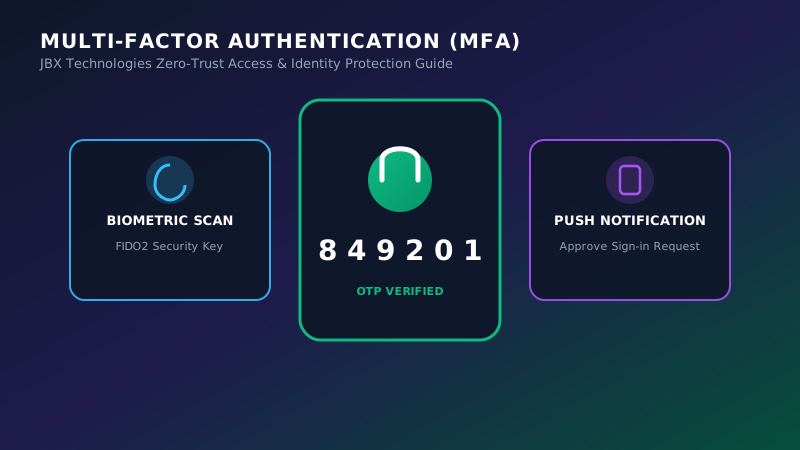
Table of Contents
What Is Zero Trust Security?
Traditional perimeter security relied on the assumption that everything inside a corporate network could be trusted. Zero Trust turns this philosophy on its head with a core principle: 'Never Trust, Always Verify.' Under Zero Trust, every access request--regardless of whether it originates inside or outside the network boundary--must be fully authenticated, authorized and encrypted before access is granted.
Core Pillars of Zero Trust for Growing SMBs
For SMBs, implementing Zero Trust does not require enterprise-level budgets. The framework rests on four essential pillars: Multi-Factor Authentication (MFA) on all user accounts, Least Privilege Access Control (ensuring employees only access data vital to their role), Endpoint Detection and Response (EDR) on all laptops and servers, and Micro-segmentation of local networks.
Step-by-Step Implementation Roadmap
Start by auditing all digital assets, user accounts and cloud applications. Enforce mandatory MFA across email and ERP platforms, deploy automated software patch management, and implement encrypted VPN or zero-trust network access (ZTNA) for remote workers. Regular vulnerability scans and employee phishing awareness training complete a resilient security posture.