
What Is Zero Trust Security?
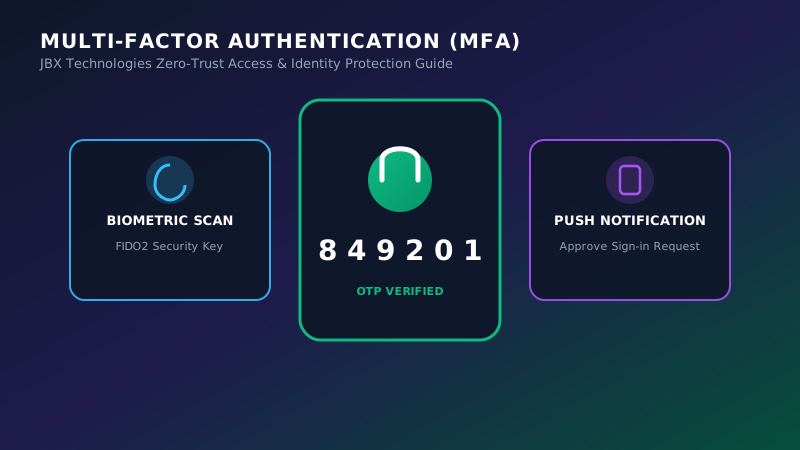
Table of Contents
What Is Zero Trust Security?
Zero Trust security is a security model built on the principle of "never trust, always verify." Rather than assuming anything inside a corporate network is safe, Zero Trust treats every user, device and application as a potential threat until it proves otherwise — every single time it requests access, regardless of whether it sat inside the firewall a moment ago. This replaces the older "castle-and-moat" approach, where anyone who got past the perimeter was implicitly trusted.
How Zero Trust Works
In practice, Zero Trust works by verifying identity and device health for every request, granting only the minimum access needed for that specific task (least privilege), and segmenting the network into small zones so a breach in one area cannot spread freely to another. Continuous monitoring and strong authentication — such as multi-factor authentication — replace one-time login checks, and access decisions are re-evaluated constantly based on context like location, device posture and behaviour.
Why It Matters for Businesses
For businesses, Zero Trust matters because employees now work from home, on personal devices, and across cloud apps that sit outside the traditional office network — the old perimeter has effectively dissolved. A Zero Trust approach limits the damage a single stolen password or infected laptop can cause, which is why it has become the reference model recommended by most cybersecurity frameworks and increasingly required by clients, insurers and regulators.