
What Is a Docker Image?
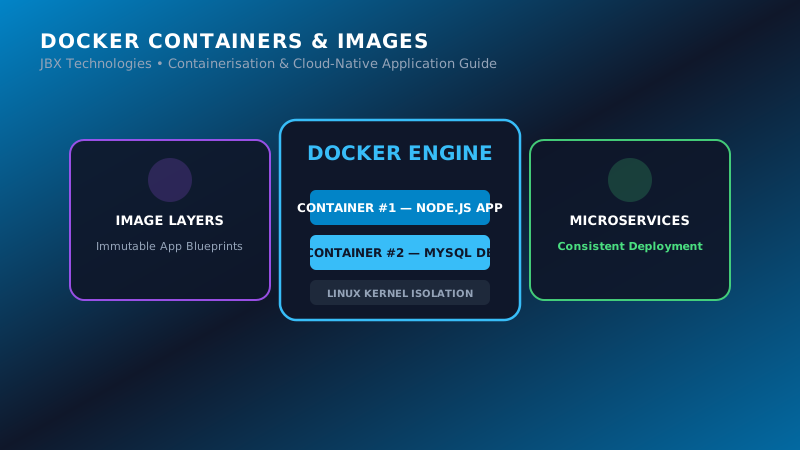
Table of Contents
What Is a Docker Image?
A Docker image is a lightweight, standalone package that contains everything needed to run a piece of software: the application code, runtime, system libraries, and settings. It's essentially a snapshot or template that defines exactly what should be installed and configured, built from instructions in a file called a Dockerfile.
Image vs Container — What's the Difference?
The image is the blueprint; a container is a running instance of that image, similar to the relationship between a class and an object in programming, or a recipe and the meal you actually cook from it. You can create many containers from the same image, each running independently, and because every container built from the same image starts from an identical, known state, it eliminates a huge source of bugs caused by inconsistent environments.
Why Developers Use Them
The core benefit is consistency: a Docker image runs the same way on a developer's laptop, a testing server, and production, solving the classic "it works on my machine" problem where software behaves differently depending on what's installed on the underlying computer. Images also make deployment faster and more predictable, since spinning up a new container takes seconds rather than manually installing and configuring software each time, and they make it easy to run multiple isolated applications on the same physical server without them interfering with each other.