
What Is a Motherboard?
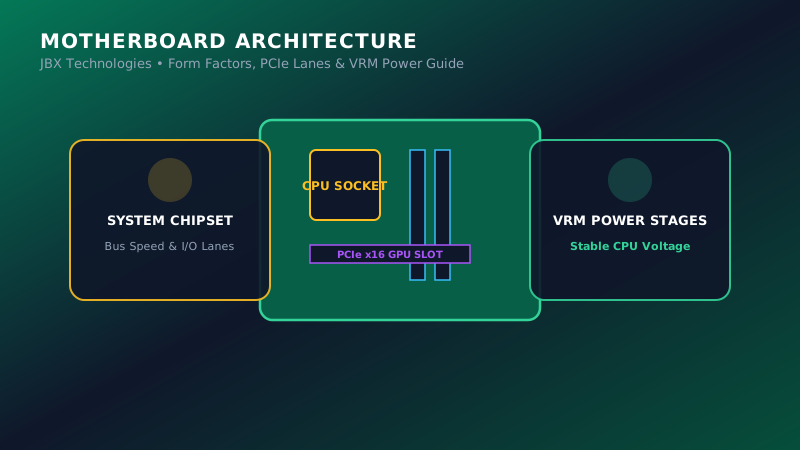
Table of Contents
What Is a Motherboard?
The motherboard is the main circuit board inside a computer that everything else plugs into. It's the central hub that lets the processor, memory, storage and other components communicate with each other, distributing power and data between them. Without it, none of a computer's individual parts would be able to work together.
Key Components It Connects
- CPU socket: where the processor is installed, and its type determines which processors are compatible.
- RAM slots: where memory modules are inserted, with the motherboard determining the maximum capacity and speed supported.
- Storage connectors: SATA and M.2 slots for hard drives and SSDs.
- Expansion slots (PCIe): used for graphics cards, network cards and other add-in cards.
- Ports and headers: USB, HDMI, audio and connections for case fans and the power supply.
What to Consider When Choosing One
The most important factor is compatibility: the motherboard's socket must match your chosen processor, and its form factor (like ATX or Micro-ATX) must fit your computer case. Beyond that, consider how many RAM slots and storage connectors you need for future upgrades, and whether it has enough expansion slots for any add-in cards. For business workstations and servers, reliability and support for remote management features often matter more than raw performance specs.